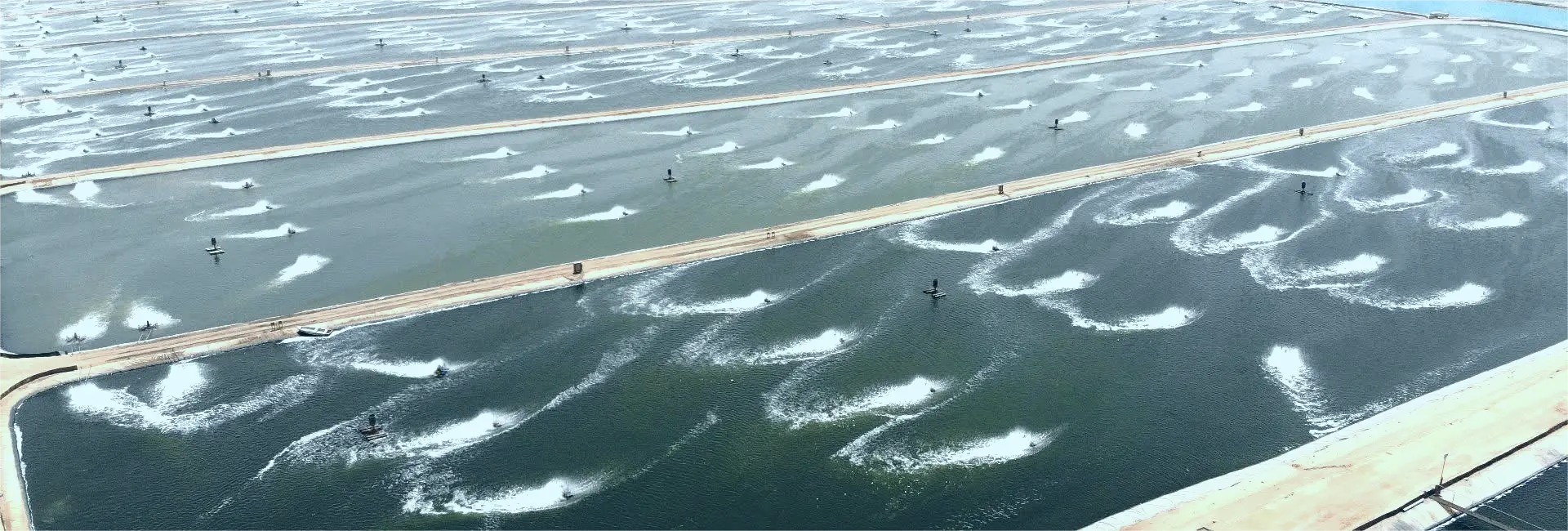
Paddle wheel aerator has been wide used in both fish and shrimp farming for decades. As one of the professional paddle wheel aerator suppliers, Shanghai Flojett upgraded some spare parts of traditional paddle wheel aerators, and use advanced technology to lower the motor consumption. All what we do can ensure customers have more durable, higher oxygen efficiency and more energy saving paddle wheel aerator.
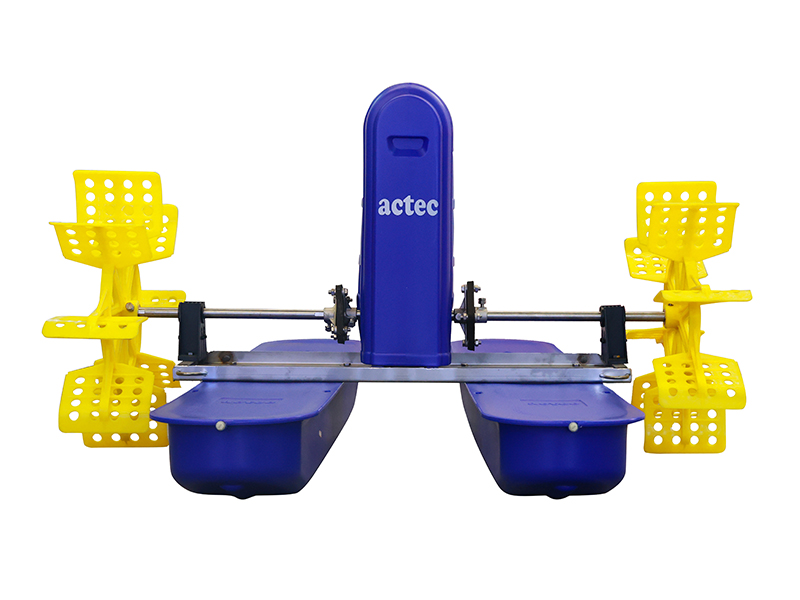
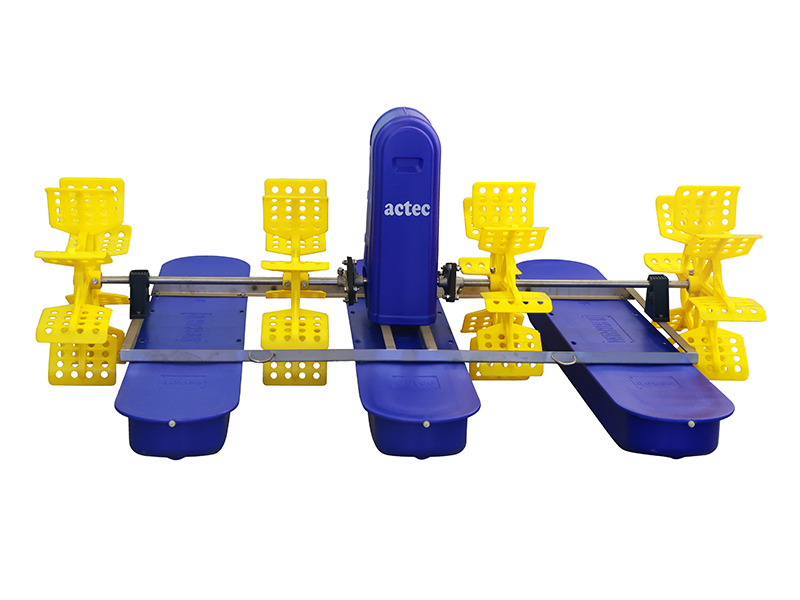
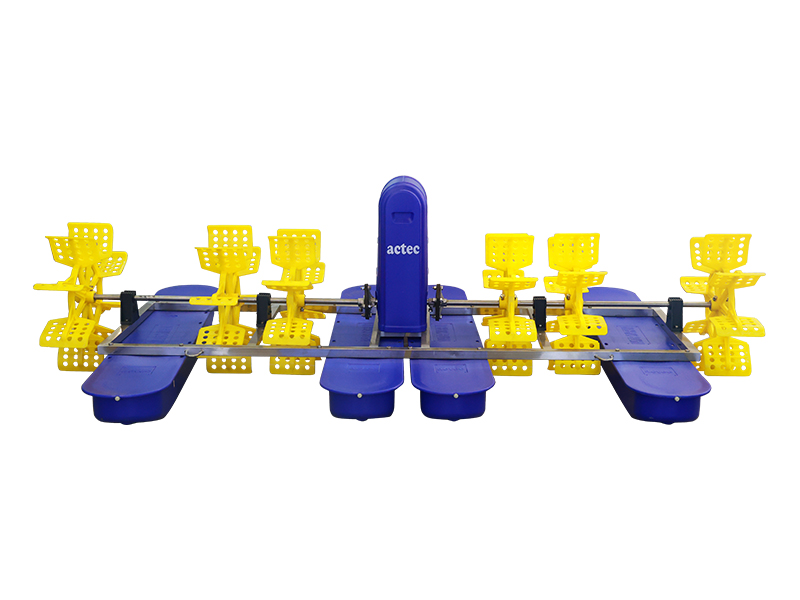
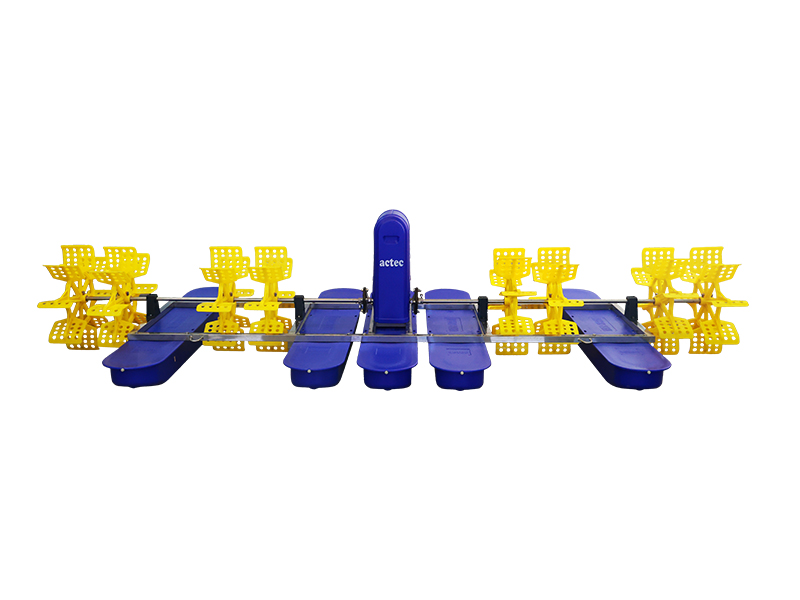
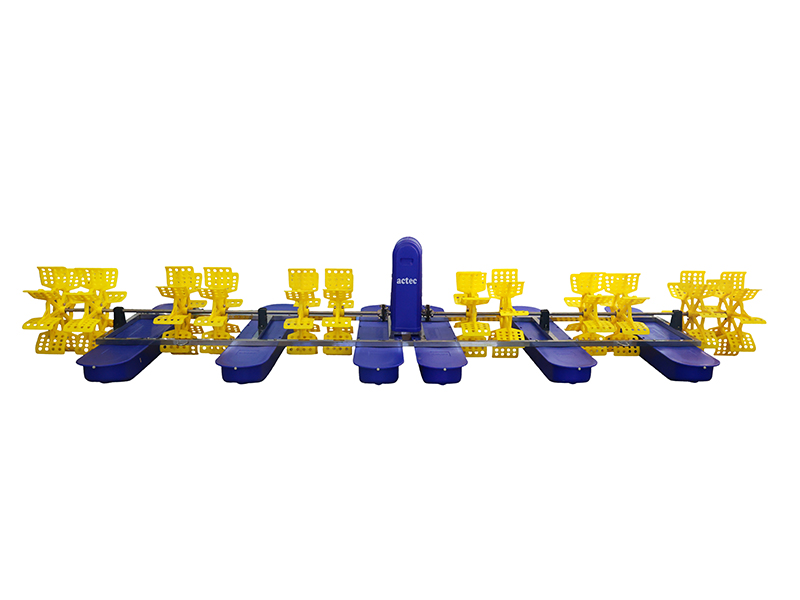
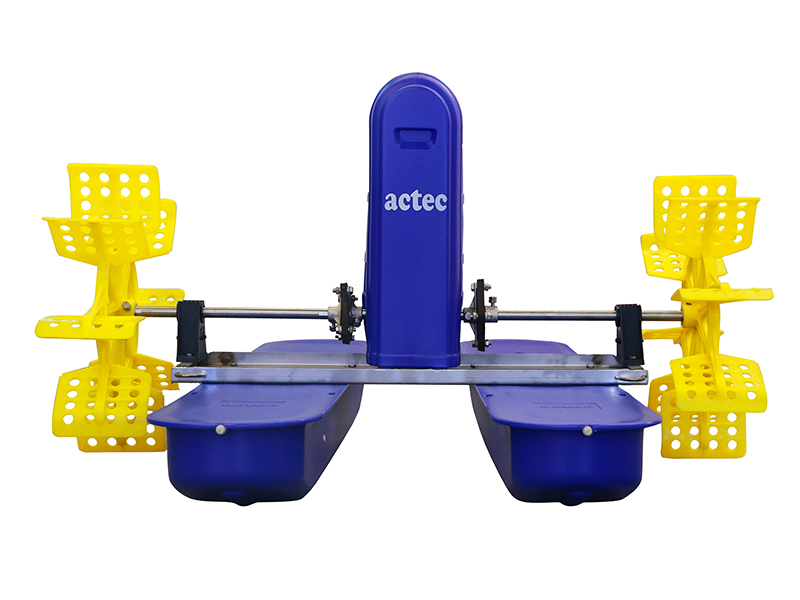
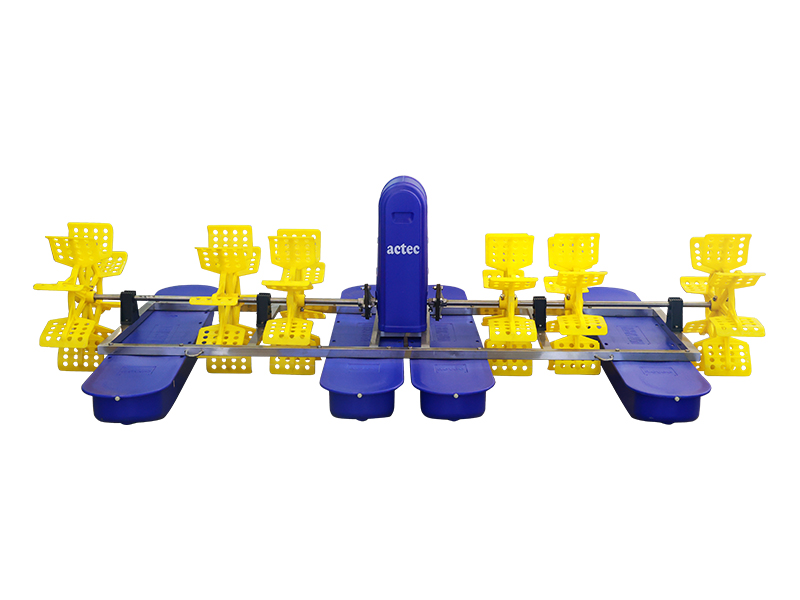
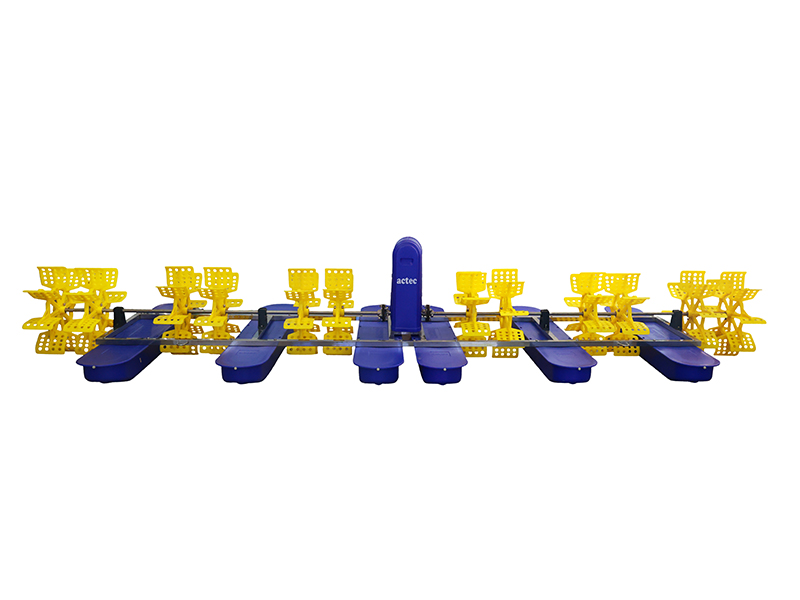
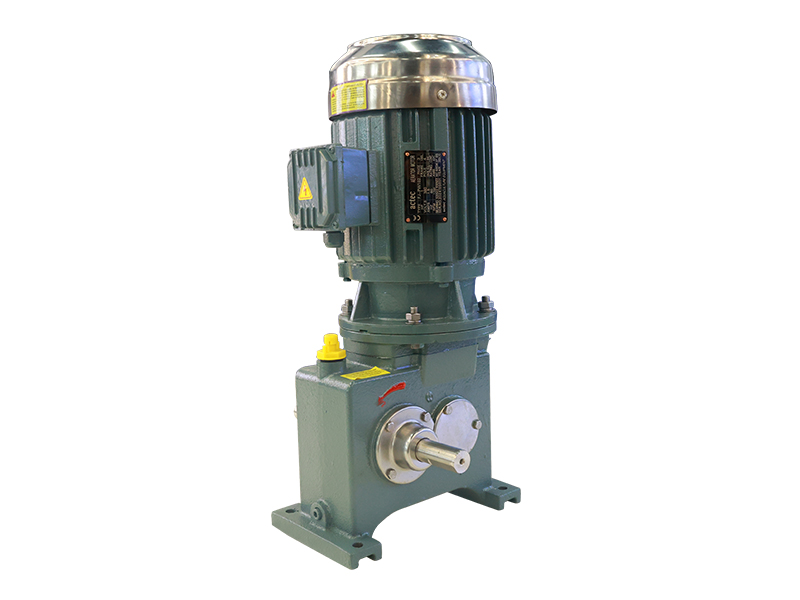
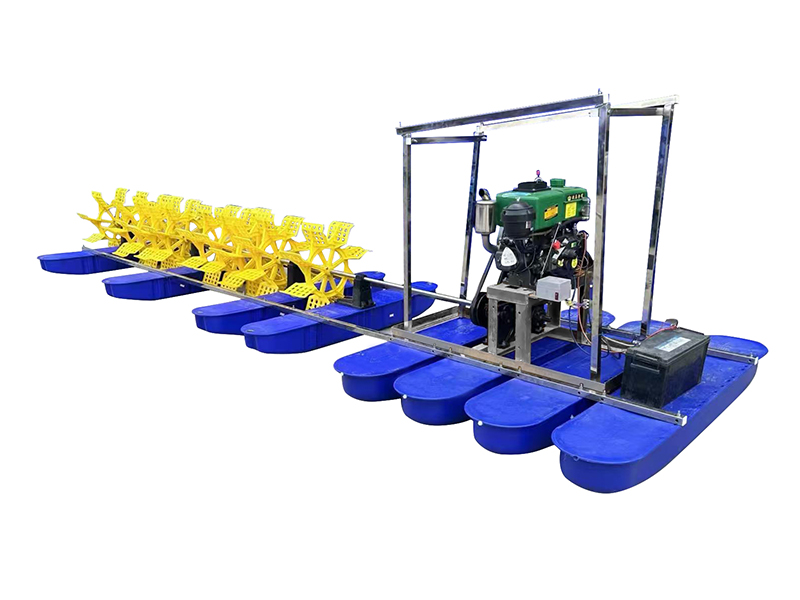
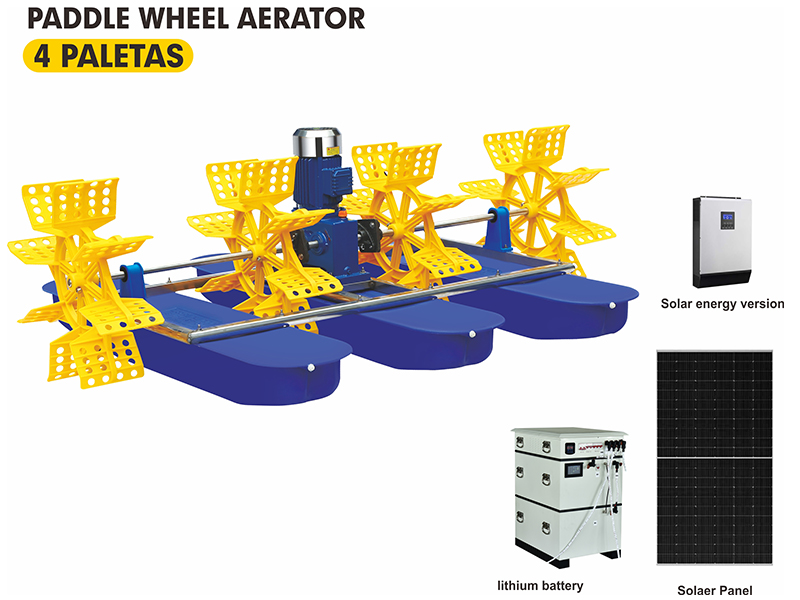

The Paddle Wheel Aerator is designed to work by using a motor to drive the impellers, which creates a strong water flow that enhances surface water movement. This action enhances oxygen transfer by increasing air-water interaction. The aquaculture aerator also accelerates water circulation, prevents stratification, reduces harmful gases, and optimizes water quality, resulting in better water quality and aquaculture productivity.
Enhanced Oxygenation: High speed running paddles rapidly increase dissolved oxygen levels, helping aquatic growth and minimizing hypoxia-related losses.
Energy Optimization: Advanced technology upgraded the motor ensures maximum performance with minimal energy consumption enabling cost-effective continuous operation.
Environmentally Resilient: Constructed from corrosion resistant spare parts, suitable for both fresh and seawater environments.
Circulation Improvement: Active water and air interacting prevents water stratification, reduces sediment buildup, and lowers harmful gas level.
User-Friendly Design: Simple structure design, quick setup and low maintenance requirements ensure easy long-term operation.
Getting the installation and placement right makes a big difference to how well your shrimp farming aerator works and how long it lasts.
Position the aerators in stagnant areas or zones with higher shrimp density to create strong water circulation across the pond. This helps prevent oxygen dead spots. Arrange them according to your pond’s shape and the machine’s power — crossing the flow from multiple units usually gives more even dissolved oxygen distribution.
The paddle wheel needs to be properly submerged for good splashing and oxygen transfer, but the motor must stay safely above the waterline. Too shallow and you waste power on splash; too deep and the paddles won’t pick up enough air. Aim for the impellers to sit about 15–25 cm into the water (check your specific model for the ideal depth).
Secure the aerator with strong ropes or chains tied to the pond bank or concrete weights on the bottom. It should stay in place even with wind and waves, but still be able to rise and fall freely with water level changes. Always use corrosion-resistant materials to avoid breakages over time.
Use waterproof cables and connectors rated for outdoor/aquaculture use. Ground the unit properly and install an RCD (leakage protector). Keep power lines fixed and raised away from the water surface to protect them from chewing by rodents or mechanical damage. Always do a dry test run first to make sure everything runs smoothly before full operation.
In practice, it’s worth having an experienced technician guide the first installation. After that, regularly check the anchoring ropes and cables — this simple habit prevents most common problems and keeps your shrimp farming aerator running reliably for a long time.
Task | Frequency | Description |
Clean impellers, floaters, and motor cover | Monthly | Remove algae, dirt, and debris to maintain efficient operation. |
Inspect and tighten bolts and fasteners | Monthly | Prevent loosening due to vibration. |
Lubricate moving parts (if applicable) | Quarterly | Ensure smooth operation and prevent wear. |
Check and replace belts (if used) | Quarterly | Inspect for cracks or looseness; replace if damaged. |
Monitor motor amperage | Quarterly | Detect abnormalities that may indicate overload or malfunction. |
Winterization in cold climates | Annually (Fall) | Drain and store properly or use anti-freeze measures to prevent damage. |
Choosing the ideal paddle wheel aerator suggest consider below factors:
Coverage request: choose aerator power as per pond dimensions, Larger/deeper ponds require higher horsepower aerator.
Biomass Density: High-density farming (e.g., intensive shrimp farms) requires heavy-duty aeration systems.
Cost-Effectiveness: Prioritize energy-efficient motor with low consumption to save operational expenses.
Material Quality: Saltwater farming environment need corrosion-resistant materials (e.g., 304SS)
Maintenance requirement: Choose simple structure, quick-access designs, less and easy maintenance needed.
Noise Management: Quieter-running aerators are more essential for farms nearby residential areas.
Brand & support: Warranty period and corsages, spare parts availability also are important factors.
Cost Strategy: Balance your budget with aerator performance, ensuring the aerator long durability.
Buyers comparing complete aquaculture equipment for sale can also evaluate blowers, pumps, liners, and diffuser systems together with paddle wheel aerators to build a coordinated pond-management setup.
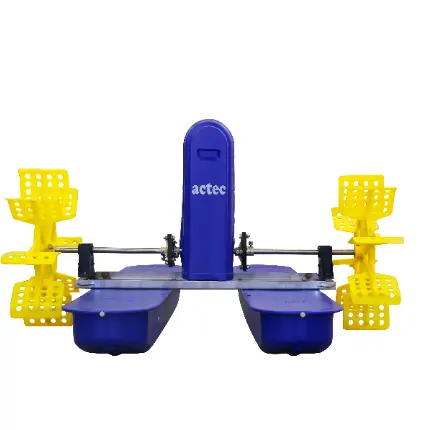
We Shanghai Flojett offer traditional 2 & 4 & 6 & 8 paddles wheel aerator, further more with our high efficiency motor, they can run more 12 & 14 &16 &20 etc paddle wheel aerators.
Paddle wheel aerator is an ideal equipment to improve the water oxygen level in aquaculture filed.
Yes, we not only have electric aerator, but also supplier aerators running by diesel, solar energy.


 English