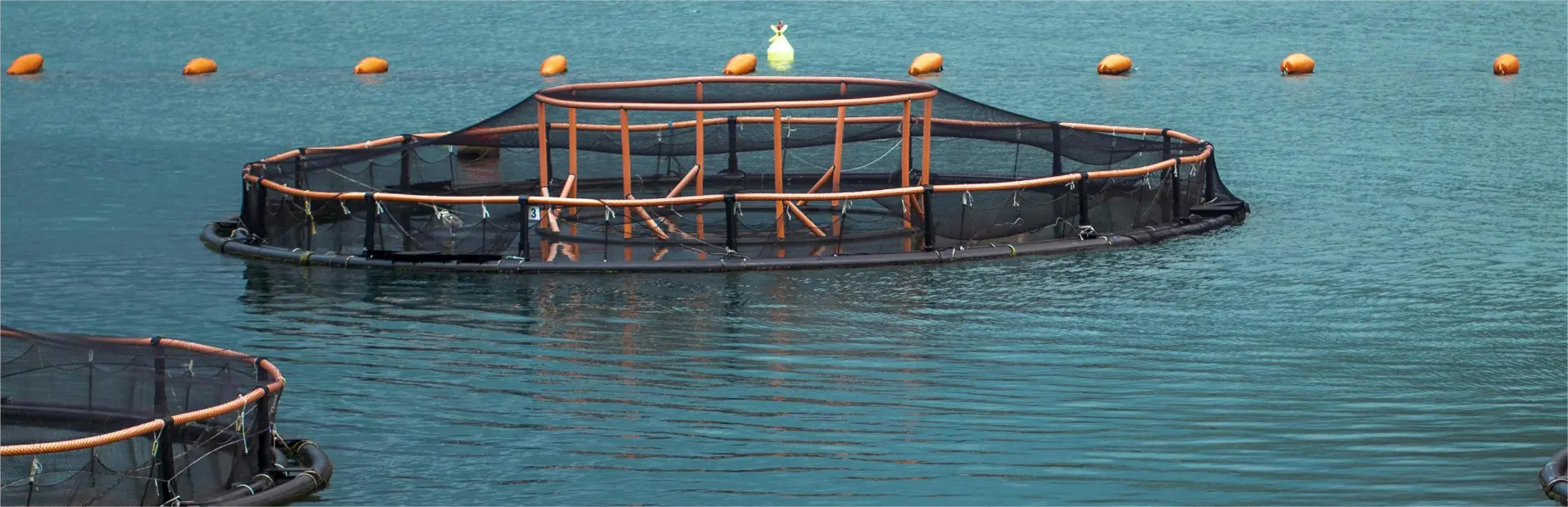
The splash aerator for sale operate at high-speed RPM to vigorously agitate water, creating a dynamic spray that enhances oxygen transfer and helps address low dissolved oxygen levels in aquaculture ponds.
As a professional aquaculture equipment manufacturer, FLOJETT supplies high-performance splash aerators for commercial fish and shrimp farming. Our product portfolio includes Water Cooling Splash Aerators, Water Cooling Surge Splash Aerators, and Super Impeller Splash Aerators, enabling customers to choose the most suitable solution based on pond conditions, oxygen demand, and budget.
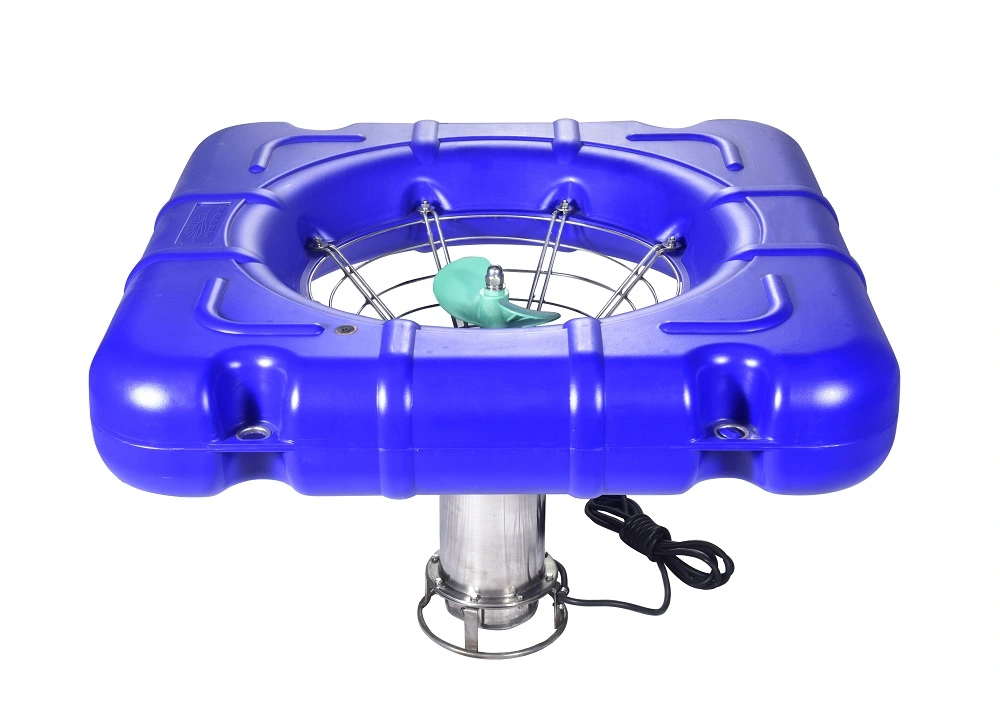
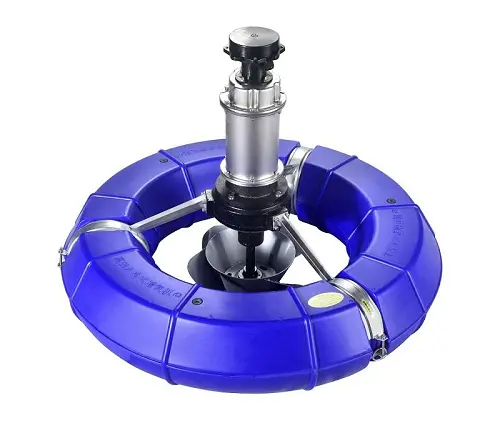
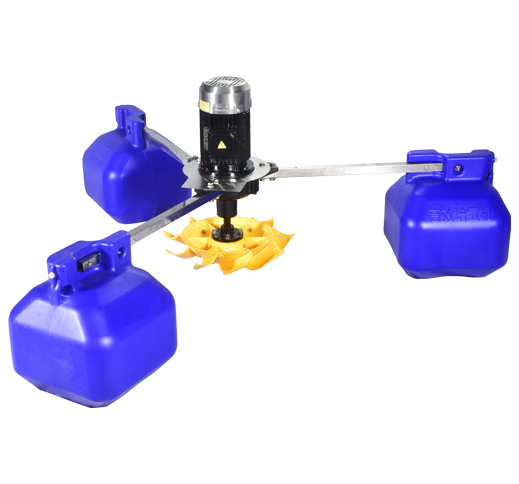
All three models address the same core problem — low DO in fish and shrimp ponds — but differ in structure, impeller design, maintenance needs, and aeration output. Use the table and notes below to match the right unit to your pond and management style.
Feature | FJ-WC Series | FJ-WS Surge Series | FJ-SI Super Impeller |
Drive system | Direct motor, no gearbox | Planetary gear reducer | Motor + reducer |
Impeller material | Nylon | Stainless steel 304 | SS304 or nylon (selectable) |
Gear oil required | No | Yes (gearbox) | No |
Motor protection | H-grade insulation | H-grade insulation | Built-in overheating & phase-loss protector |
Power options | 1.5 kW (2HP) / 2.2 kW (3HP) | 1.5 kW (2HP) | 1.5 kW (2HP) |
O₂ output (kg/hr) | ≥2.4 (1.5kW) / ≥4.3 (2.2kW) | ≥2.6 | ≥2.6 |
Unit weight (kg) | 33 / 34 | 33 | 40 |
Float | HDPE round, anti-UV | HDPE round, anti-UV | HDPE (3 floats), anti-UV |
Best for | Budget-conscious, oil-free, easy maintenance | Higher durability, gearbox longevity | Demanding environments, motor protection priority |
You want the lowest initial and maintenance cost — no gearbox, no gear oil changes
Your pond requires 3 HP (2.2 kW) output — only the FJ-WC offers a 2.2 kW variant
You prioritize lightweight, easy relocation between ponds
Environmental protection matters — zero risk of gear oil contamination
You need a surge aerator with consistent, higher-torque output—the planetary gear system operates smoothly and delivers greater durability during continuous heavy-duty use.
Your stocking density is higher and you want the stainless steel impeller's durability
You're operating in a tilapia or carp pond where the unit runs 12+ hours daily
Budget allows for periodic gear oil maintenance in exchange for mechanical longevity
Your electrical supply is unstable — the built-in overheating and phase-loss protector auto-shuts the unit before motor damage occurs
You want the most flexible parts ecosystem — impellers are available in SS304 or nylon, and motors in water-cooling, cast iron, or permanent magnet options
You're scaling up and want units that can be reconfigured for different pond sizes or power supplies
You manage multiple species across different farms and need a single model that adapts
Contact Flojett with your pond dimensions, fish species, and stocking density for a site-specific recommendation.
Low dissolved oxygen during peak feeding periods or warm summer nights
Surface stratification — stagnant top layers with poor circulation
Toxic gas buildup (CO₂, H₂S) near the water surface
Slow fish growth and poor feed conversion caused by chronic mild hypoxia
Fish kills during weather events that suppress natural oxygen exchange
Inadequate aeration coverage in small or shallow ponds where diffuser hose installation is impractical
Effective at increasing surface dissolved oxygen levels.
Can provide some degree of water circulation and mixing, especially near the unit.
Relatively simple design and often lower initial cost compared to some other types.
Can help in degassing harmful gases from the water surface.
Visually indicates operation.
Can be relatively easy to install and move.
Flojett supplies splash aerators for fish ponds, shrimp farms, hatcheries, and other commercial aquaculture projects. For distributors, contractors, and farm operators seeking aquaculture equipment wholesale, available models can be selected according to pond size, water depth, stocking density, installation conditions, and required oxygen transfer capacity.
In addition to splash aerators, a complete pond aeration system may include paddle wheel aerators, air blowers, pumps, aeration hoses, diffusers, and HDPE pond liners. Selecting compatible equipment helps improve water circulation and simplifies installation, operation, and maintenance across the farming site.
A splash aerator increases dissolved oxygen (DO) through surface agitation and air-water contact. The motor drives a high-speed impeller that scoops water from below the surface and throws it upward as a wide spray. As the droplets travel through the air, oxygen transfers across the expanded water-air interface. When the droplets fall back into the pond, they carry the absorbed oxygen down into the water column.
Unlike submersible diffusers that aerate from the bottom up, or paddle wheel aerators that sweep horizontally, splash aerators concentrate oxygen input at the top 30–60 cm — the zone where fish and shrimp spend most of their time and where DO depletion happens first during hot nights or after overcast days.
The process also degasses harmful dissolved gases — carbon dioxide and hydrogen sulfide — that accumulate near the surface, which further improves water quality beyond DO alone.
Splash aerators are best suited to open, shallow-to-medium-depth ponds (typically 0.8–2.5 m water depth) where surface aeration alone is sufficient to maintain adequate DO throughout the water column. Key application environments include:
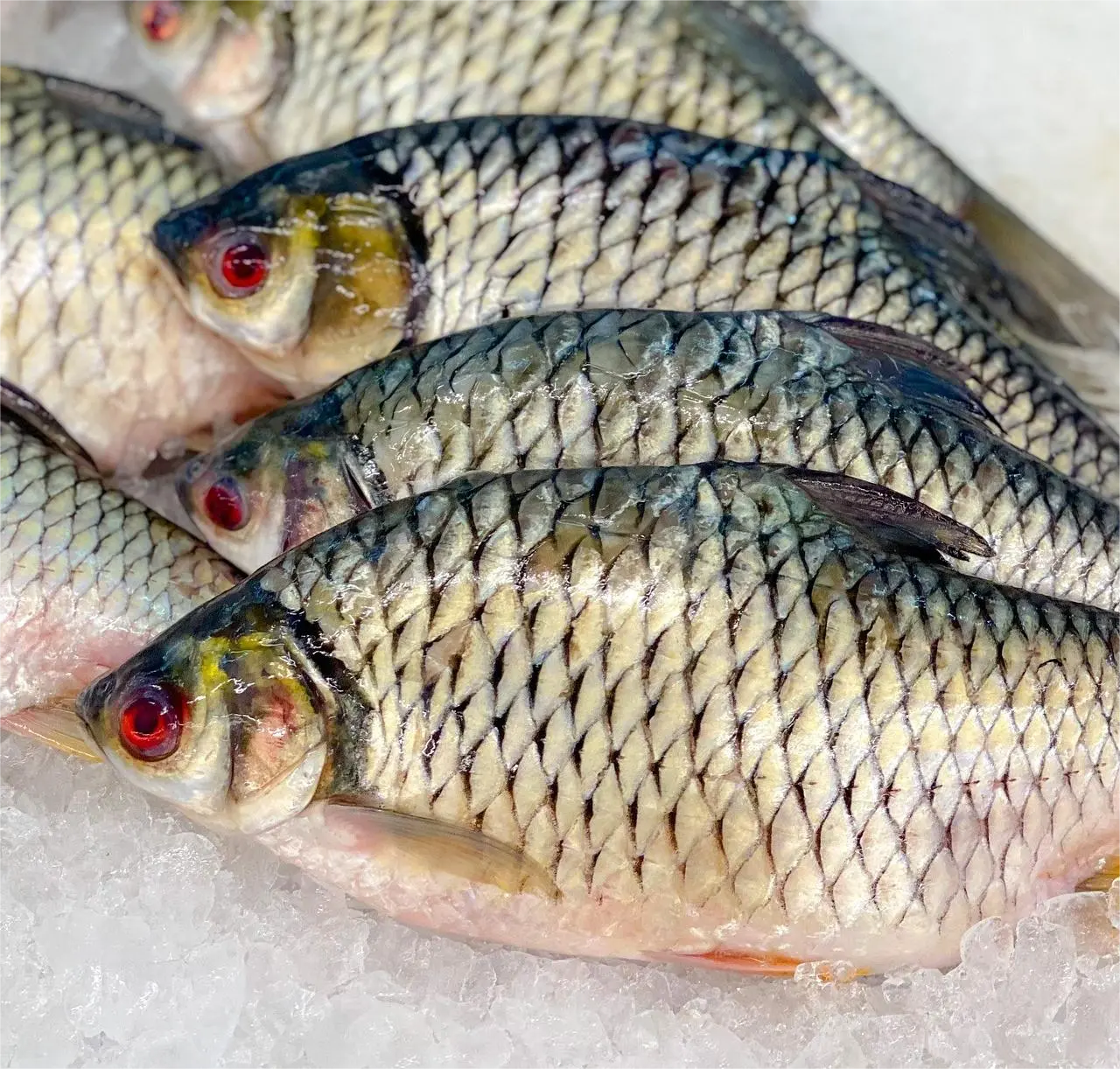
Tilapia, grass carp, carp, and catfish farming ponds
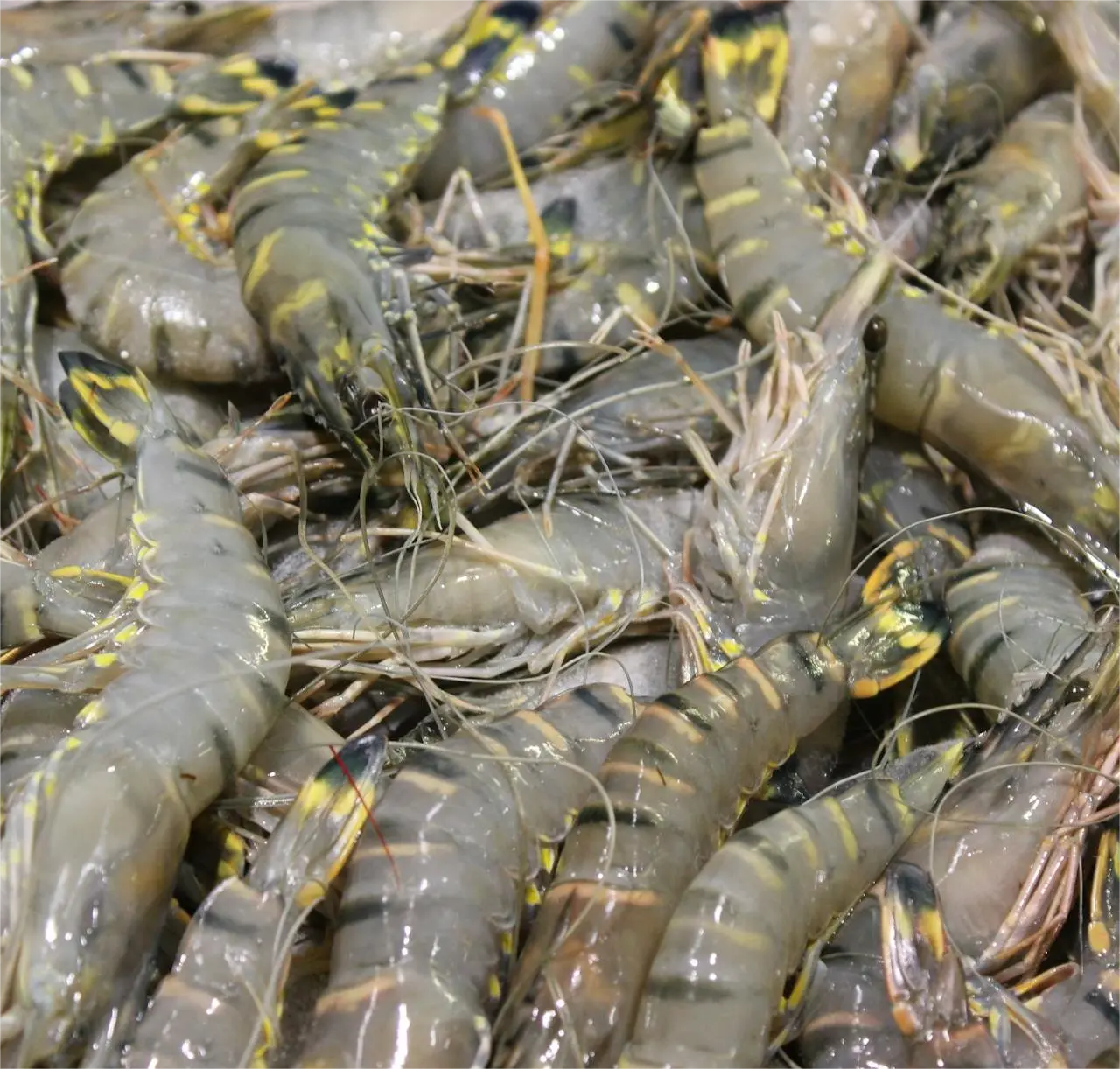
Shrimp ponds (vannamei and black tiger shrimp) — particularly as supplemental aeration alongside paddle wheel units
Small-scale aquaculture operations under 2 acres where a single unit covers the entire pond
Wastewater treatment ponds requiring cost-effective surface aeration
Emergency backup aeration during power-cut recovery or extreme weather
For deeper ponds (>2.5 m) or high-density intensive shrimp operations, combine a splash aerator for surface oxygenation with a jet aerator or aeration hose diffuser system to reach the deeper water column.
Positioning for optimal surface agitation and localized circulation.
Ensuring proper water depth for the unit to operate effectively.
Anchoring floating units securely.
Electrical connections and safety.


 English